FRONTIER AIRLINES
The design process for the new, in-house Frontier Airlines mobile application
Role: Lead Designer
Team: Small in-house design team
Platform: iOS & Android
Timeline: Early 2023 to full rollout in May 2025
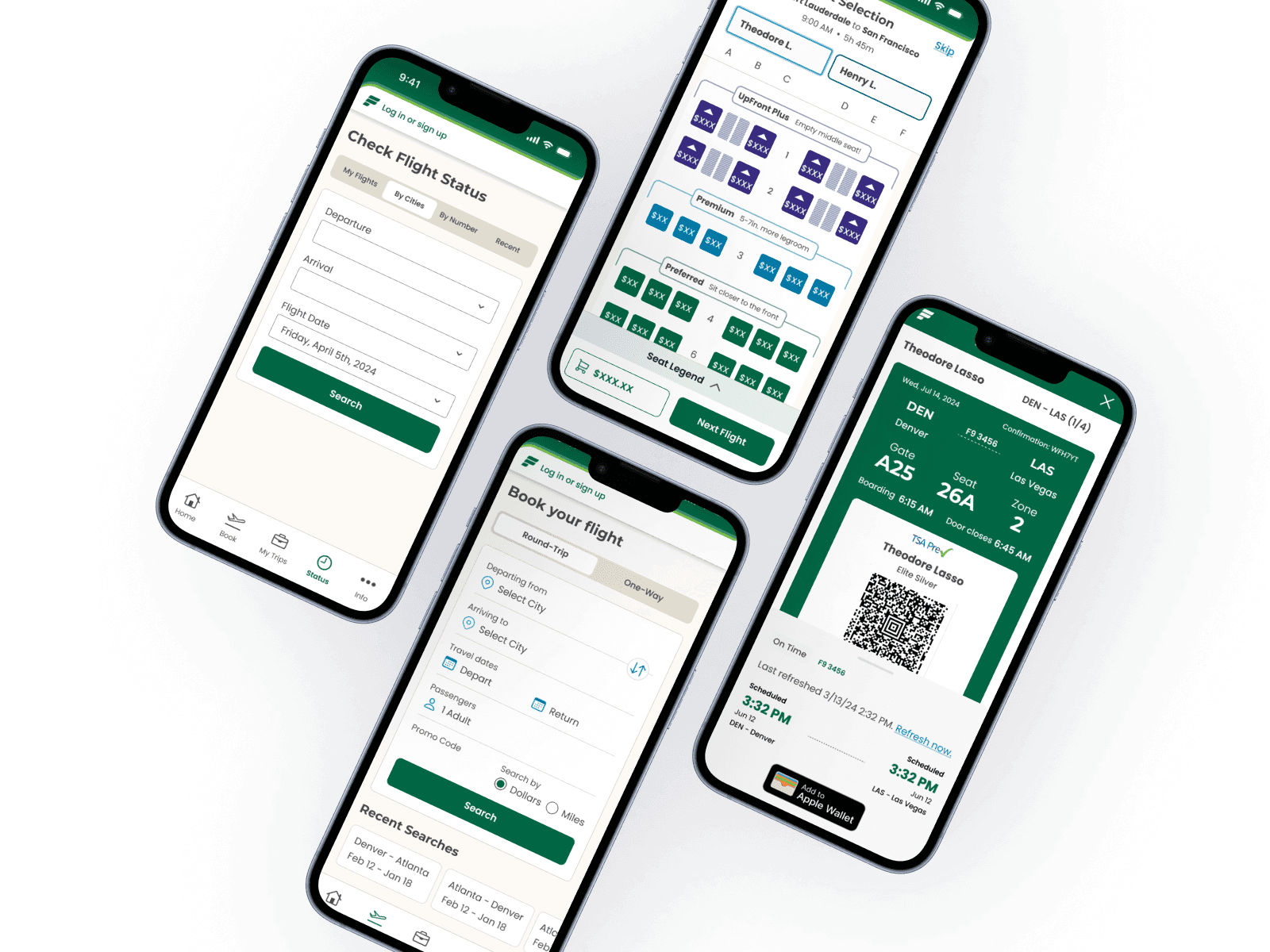
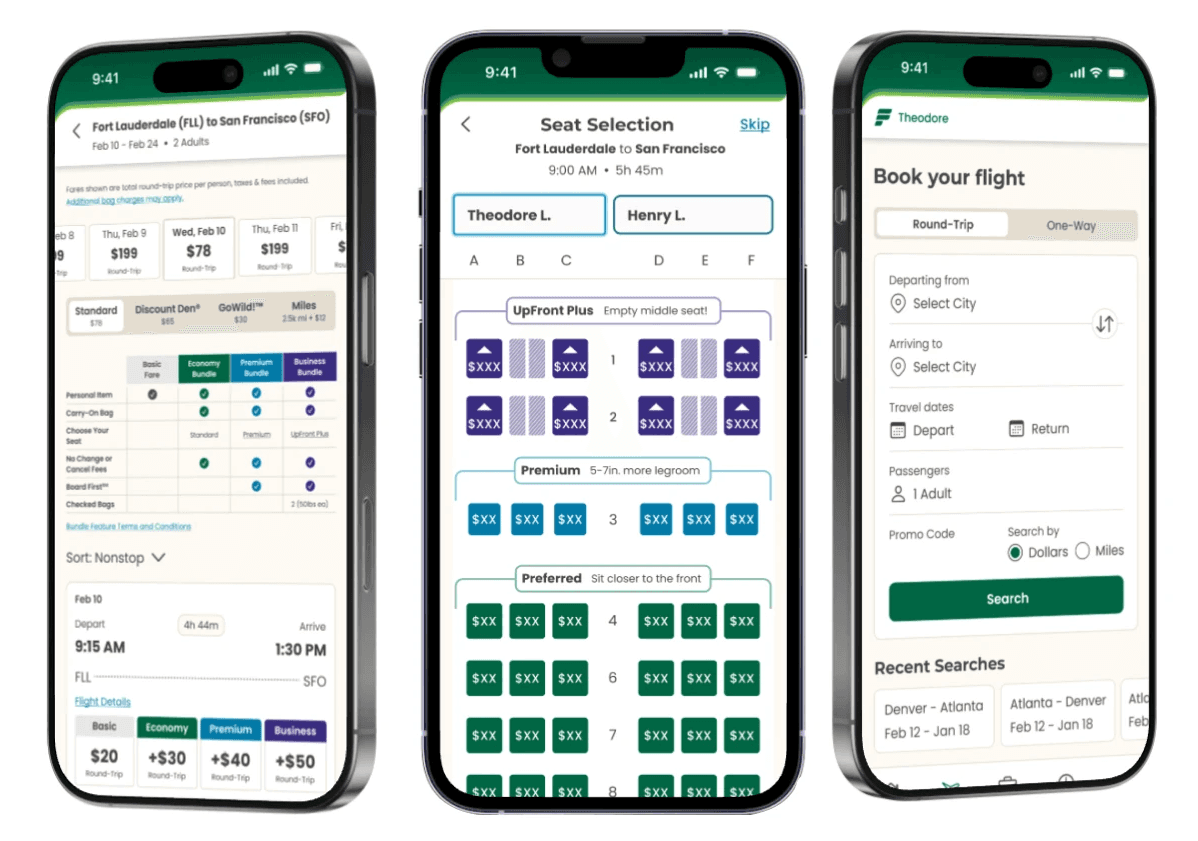
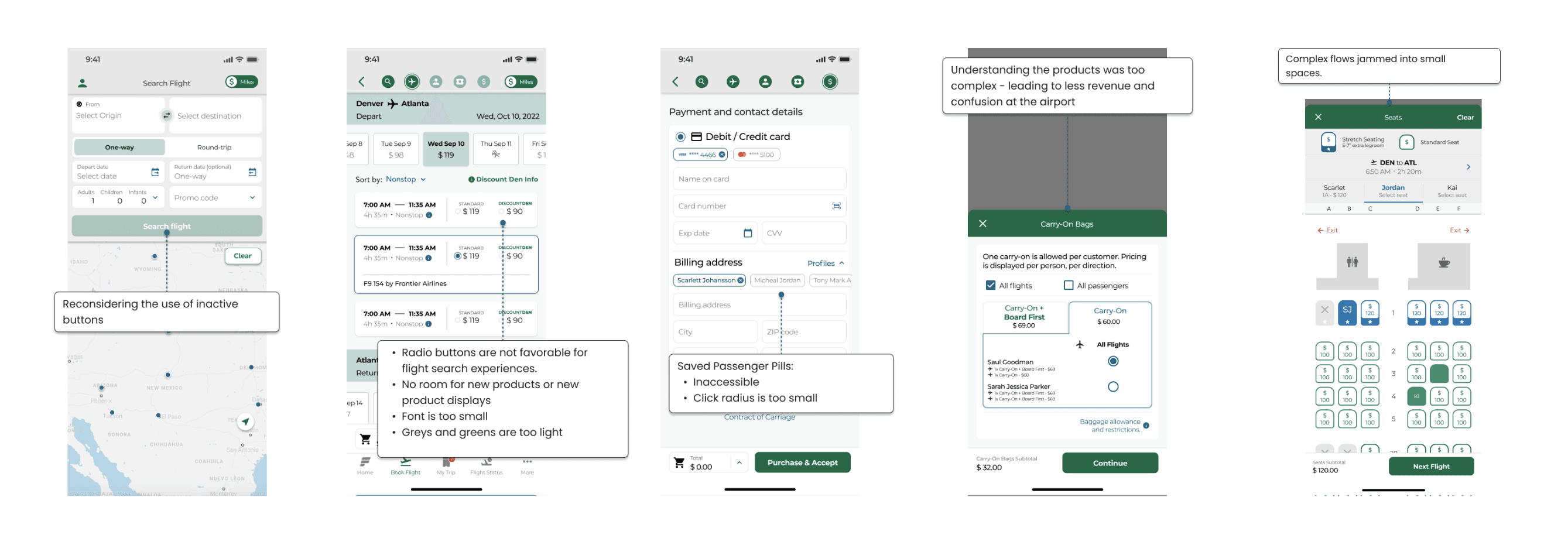
Our mobile application was fully owned and operated by a third-party vendor, and its performance and functionality were lackluster, with frequent bugs, limited features, and growing frustration from both our customers and our internal teams. Our initiative was to bring the entire production in-house, completely designed, built, and launched by the Frontier team.
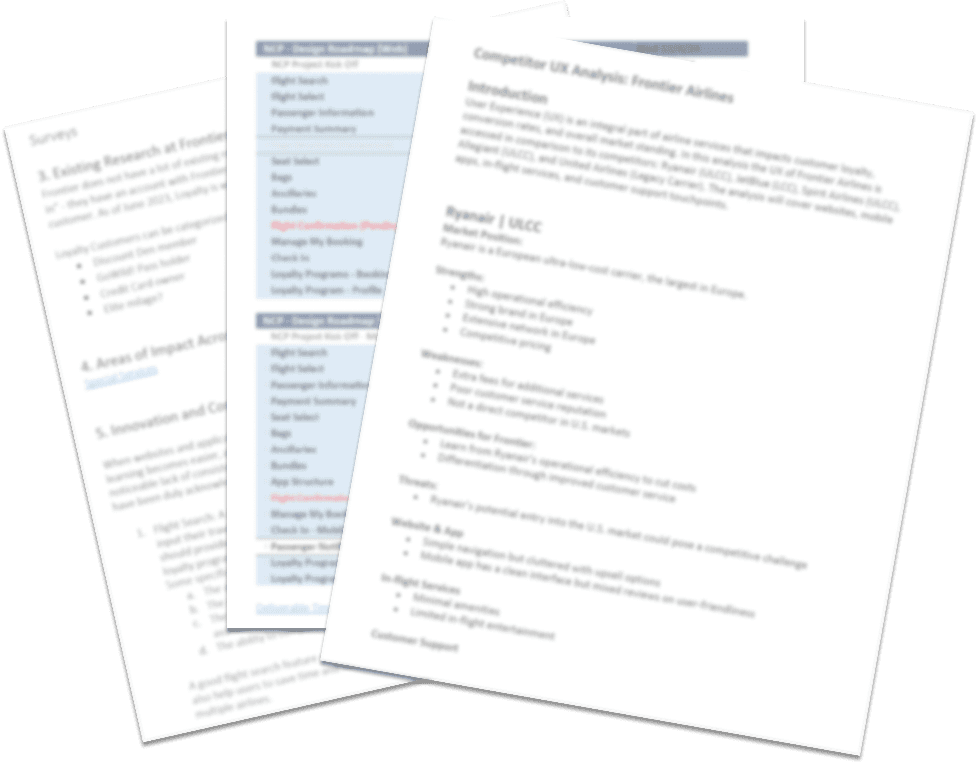
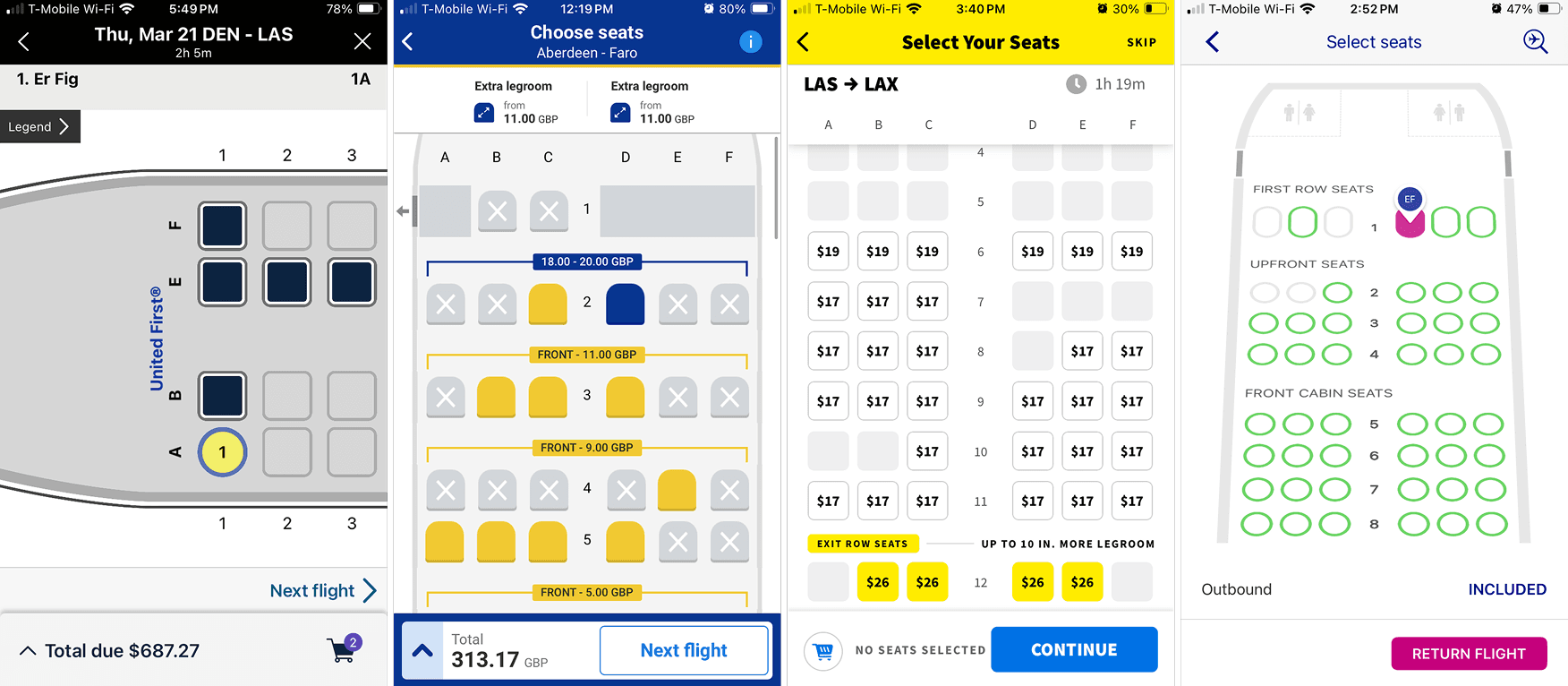
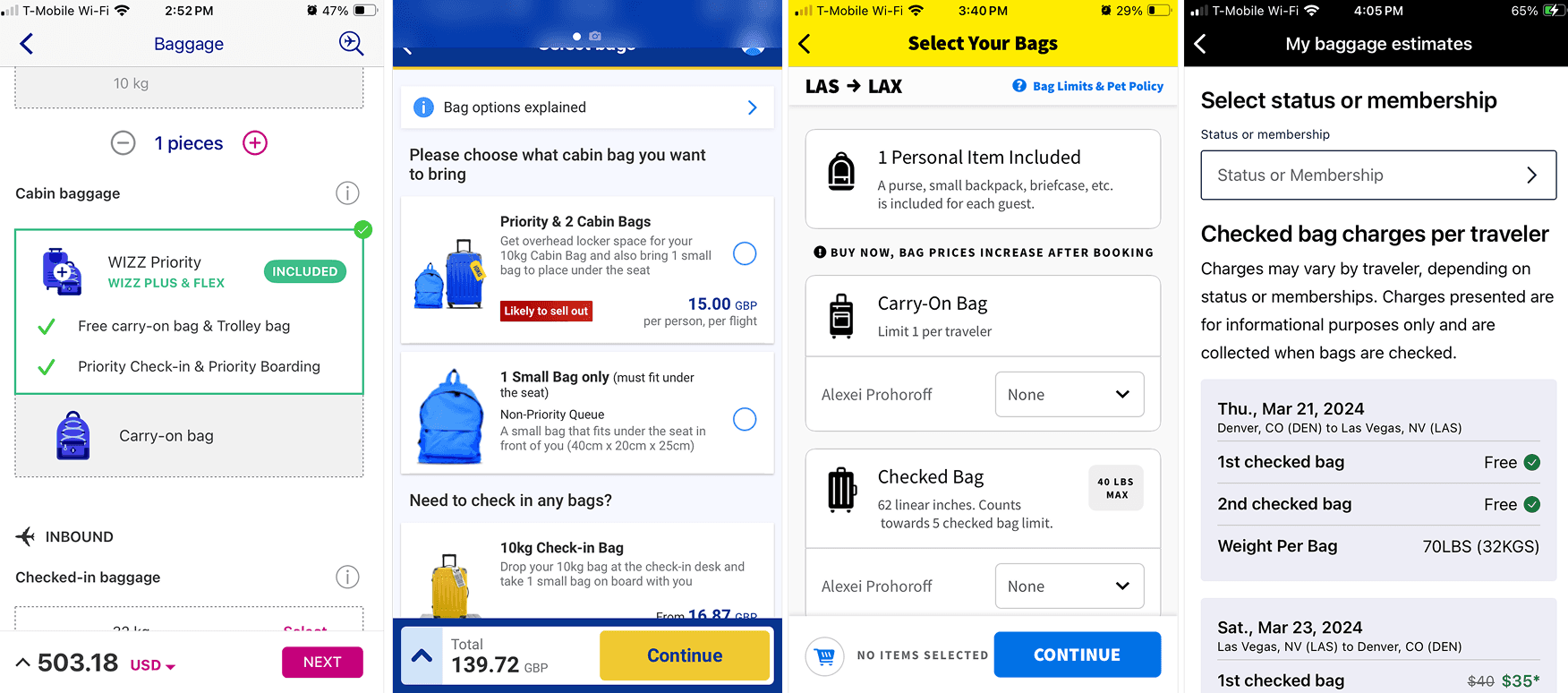
A major part of our process was constant competitive analysis. Airline websites and applications change daily, and it was a race to keep up with new features that our executive team wanted included in the roadmap based off what others were doing.
We broke the booking flow down page by page, looking closely at how each UI element worked in context. Our stakeholders were especially interested in how other airlines presented and represented their products, right down to the smallest details. We had a running Figma file that compiled hundreds of screenshots of websites (both desktop and responsive sizes) and applications of airlines, documenting every process from booking, to check-in, canceling, and everything in between.
Note: These are some of the oldest screenshots we have, and they do not represent the full range of airlines we have examined overall.
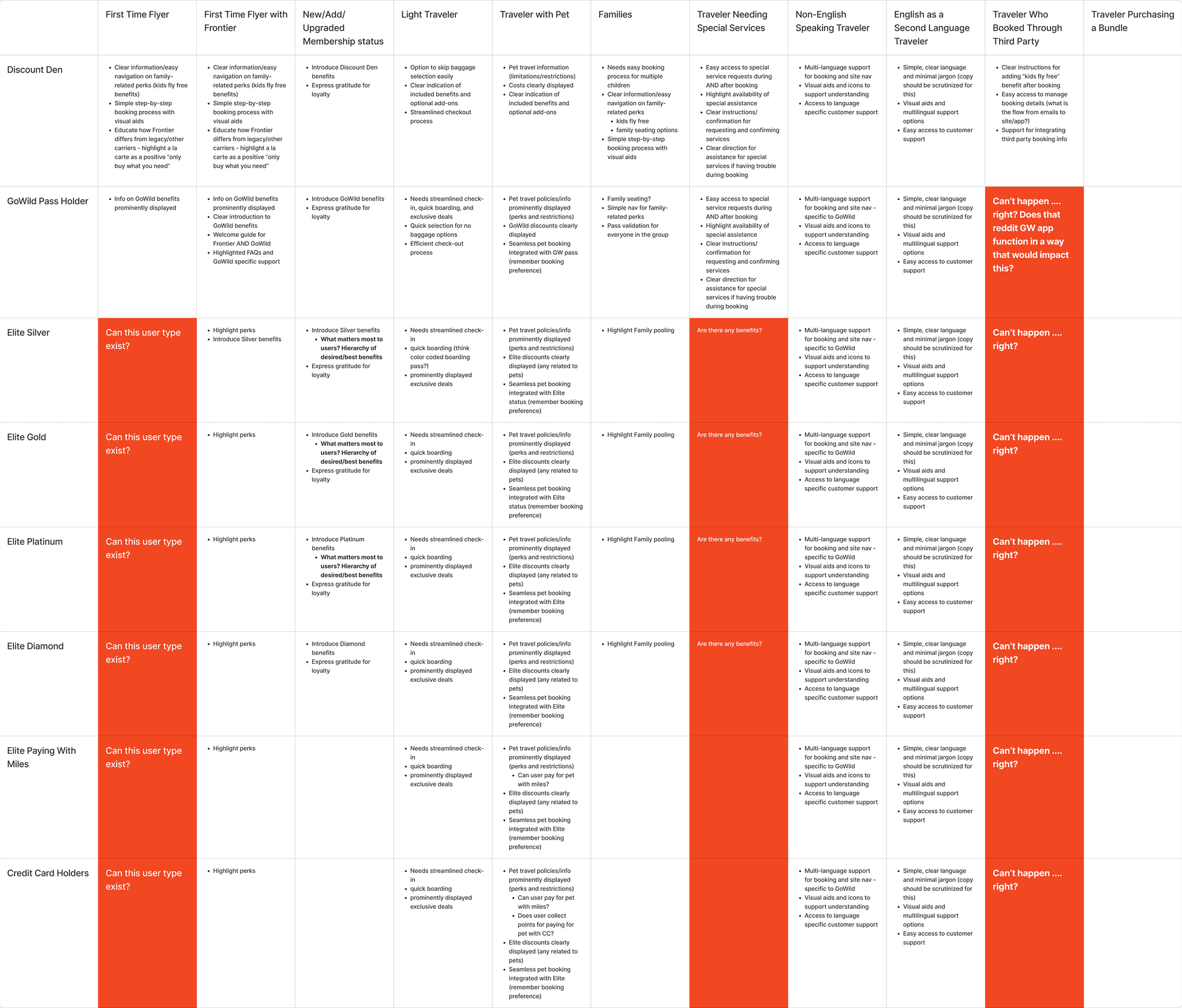
To better understand the full range of Frontier customers, our team ran a series of collaborative FigJam mapping sessions. We explored a wide spectrum of traveler behaviors, mindsets, and habits. We captured everyone from frequent flyers to first-timers.
We mapped distinctions such as:
• Travelers who pack light vs. those who pack heavier
• First-time flyers vs. elite-status loyalty members
• Regular Frontier travelers vs. occasional deal-seekers
• One-time anonymous buyers vs. high-value repeat customers
Once we had a broad, unfiltered view of our audience, we grouped the insights into reference tables. These became a key resource throughout our process, helping us stay grounded in real user needs and pressure-test flows across critical moments, from add-on selection to seat choice.
Reflections
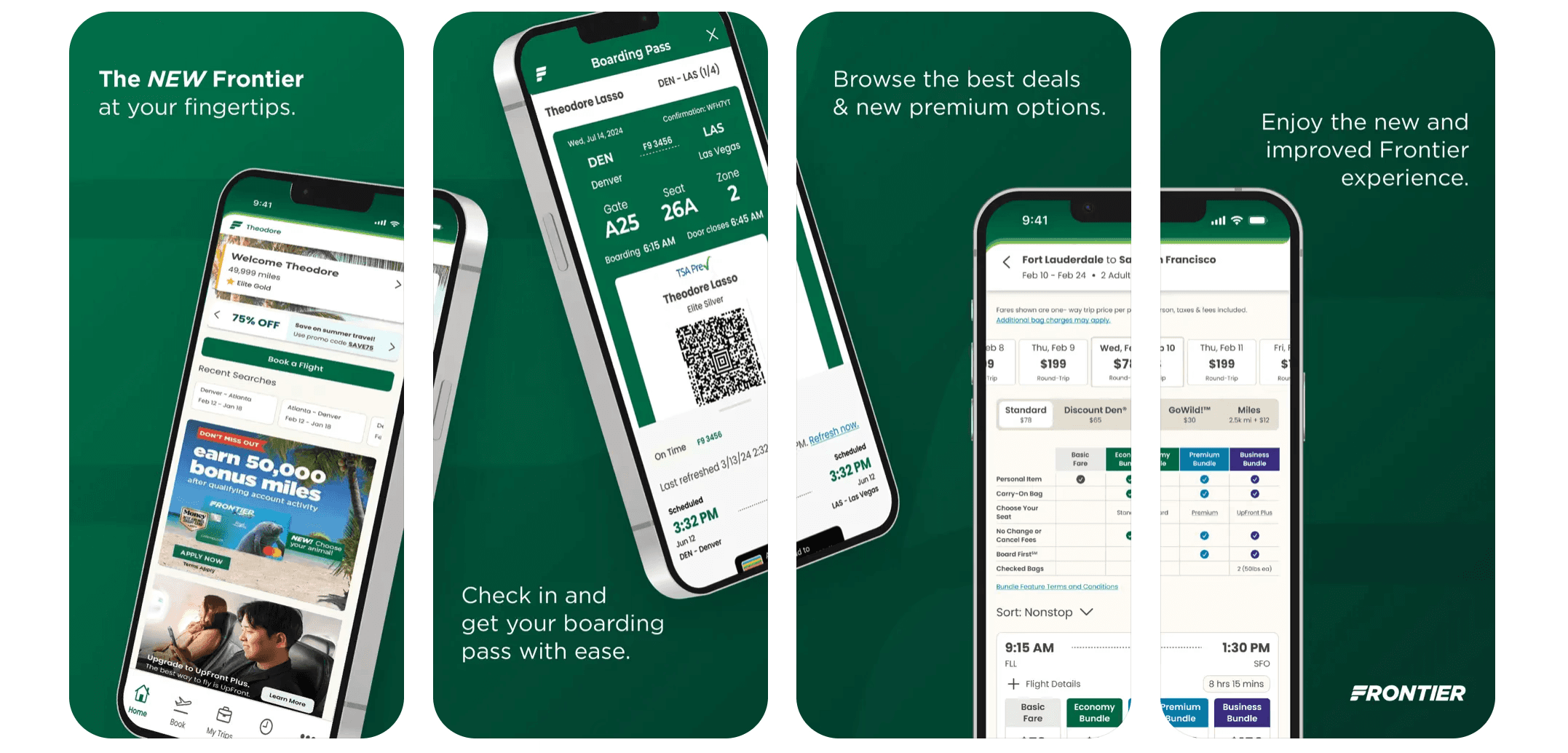
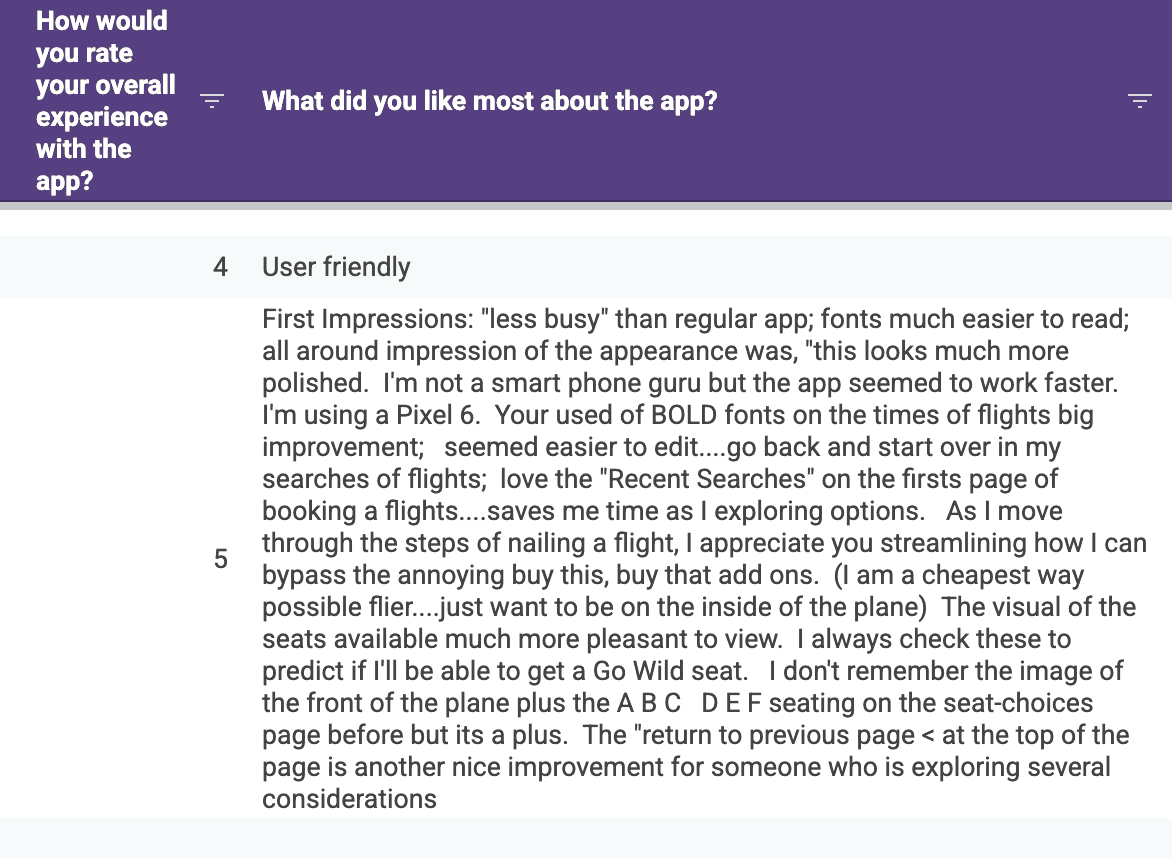
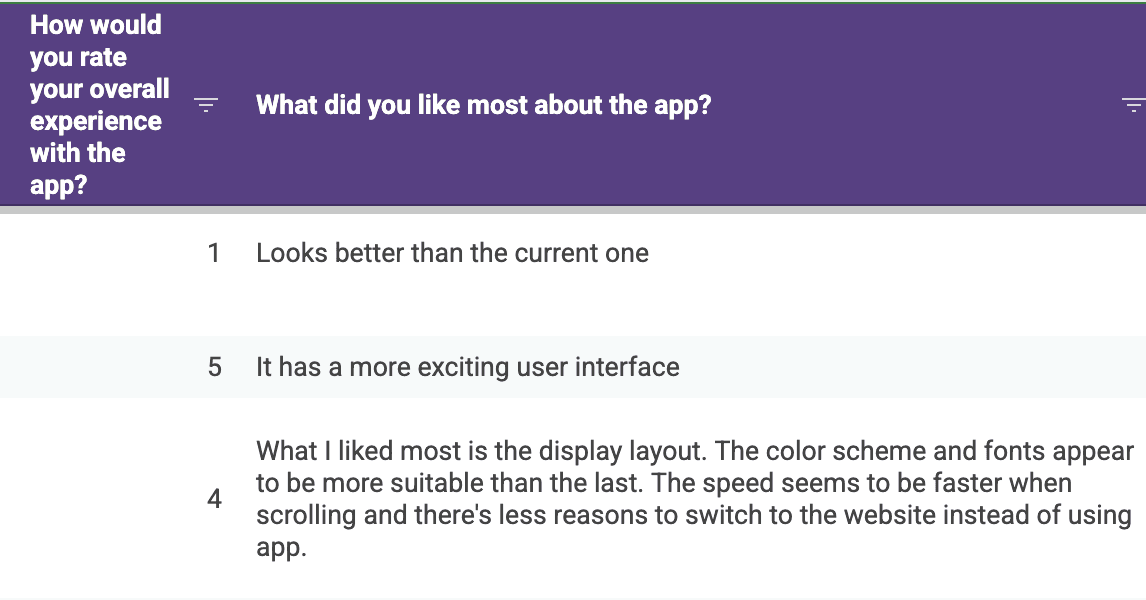
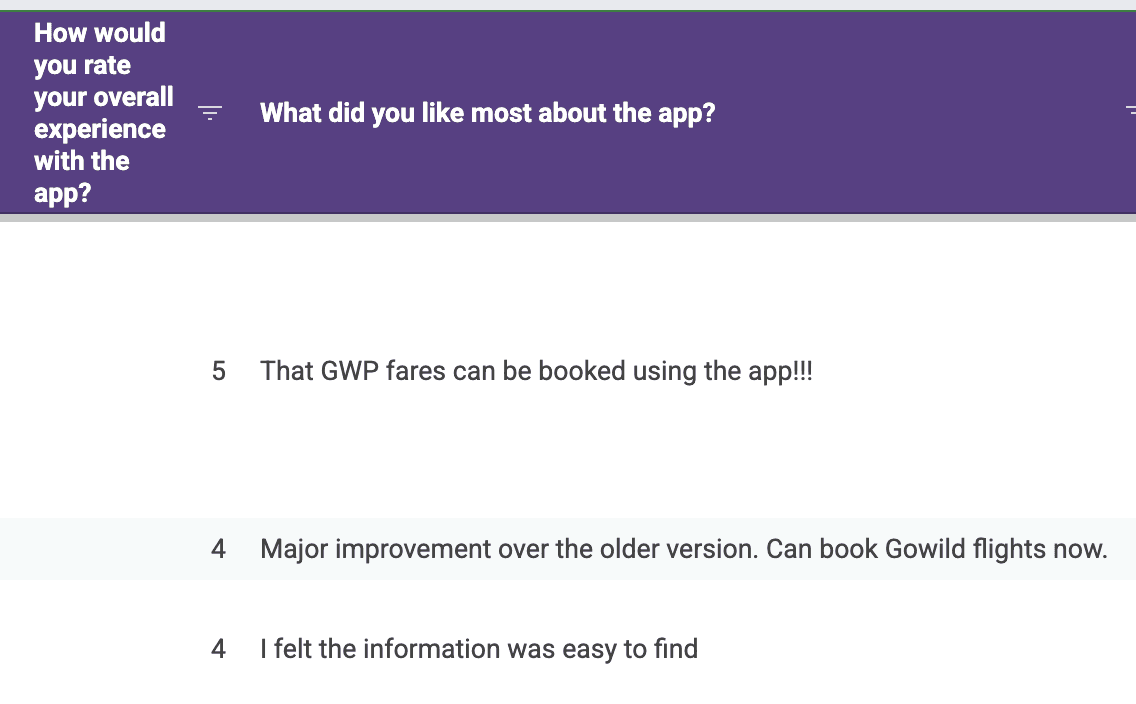
Shipping a fully redesigned mobile app on an accelerated timeline with a lean team was no small task. This project demanded not just design skills but leadership, strategic thinking, and adaptability. I'm proud of how we transformed Frontier's mobile presence, all while navigating setbacks, ambiguity, and an ever-changing airline landscape.
This was my first major project that I have been a key player in from conception, to definition, designing, iterating, prototyping, and testing to full rollout. In 2024, Frontier serviced over 33 million flyers, a number that was quite daunting to me, knowing a majority of those users relied on our work to get to where they needed to go. I feel a significant amount of pride, and an equal amount of trepidation because I have poured so much time and energy into this initiative. I could not have done it without my incredible team of designers, directors, product owners, engineers, and leadership. Many thanks to everyone involved, and thank you for reading this far. Happy flying!